How to Prepare a Safety Case Report for the Building Safety Regulator
The Building Safety Act 2022 introduced a new regulatory framework for Higher-Risk Residential Buildings in England. Central to this framework is the requirement for the Principal Accountable Person to prepare and maintain a Safety Case Report.
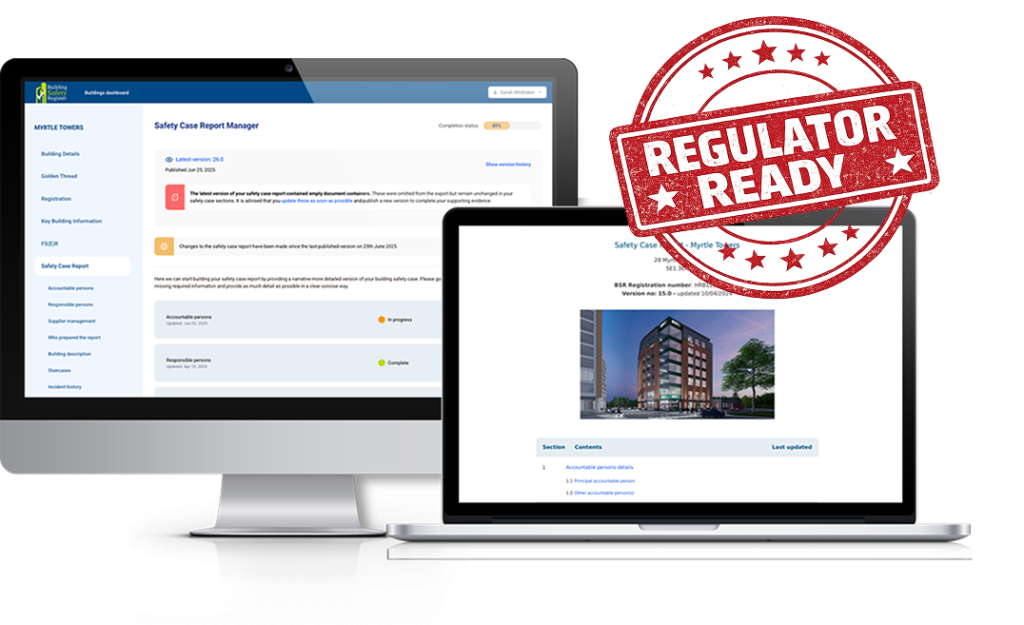
For those responsible for a Higher-Risk Building, preparing a compliant Safety Case is not optional, it is a legal duty. The Safety Case must demonstrate that building safety risks have been identified, assessed and are being effectively managed.
This guide explains what a Safety Case Report is, what it must include and how to approach preparation in a structured and regulator-ready way.
What Is a Safety Case Report?
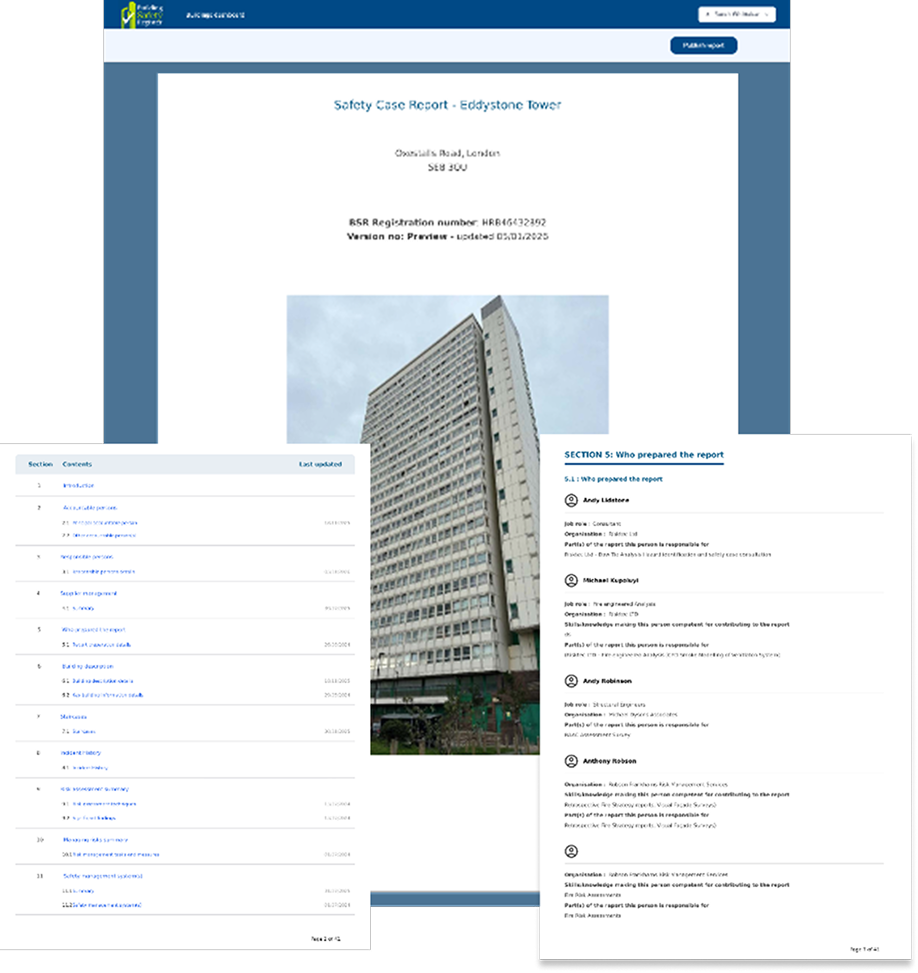
A Safety Case Report is a structured body of evidence that demonstrates how fire and structural safety risks are being managed in a Higher-Risk Building.
It is not simply a fire risk assessment, nor is it a collection of technical documents. Rather, it is a clear explanation, supported by evidence, showing:
- What the building safety risks are
- How those risks have been assessed
- What measures are in place to control them
- How those measures are monitored and maintained
The Safety Case forms part of the regulatory oversight carried out by the Building Safety Regulator. The Regulator may request to review the Safety Case at any time, and it must be sufficient to demonstrate ongoing compliance.
If you are unsure whether your building qualifies as a Higher-Risk Building, see our guide to Higher-Risk Building compliance.
Who Must Prepare a Safety Case Report?
The legal responsibility to prepare and maintain the Safety Case Report sits with the Principal Accountable Person.
The Principal Accountable Person is typically the organisation or individual with responsibility for the structure and exterior of the building. In some cases, there may be multiple Accountable Persons, but one will be designated as the Principal Accountable Person.
The requirement applies to all Higher-Risk Buildings in scope of the Building Safety Act, generally residential buildings that are at least 18 metres in height or have seven or more storeys and contain two or more residential units.
The duty is ongoing. It is not a one-time submission.
Key Components of a Compliant Safety Case Report
While the legislation does not prescribe a rigid template, a compliant Safety Case Report should clearly address the following areas.
1. Building Description
A clear overview of the building, including:
- Height and number of storeys
- Number and type of residential units
- Construction type
- Structural system
- External wall system
- Fire safety systems in place
The description should provide sufficient context for the Regulator to understand how the building functions and where risks may arise.
2. Identification of Building Safety Risks
The Safety Case must identify risks relating to:
- Structural failure
- Spread of fire
- Fire detection and suppression systems
- Means of escape
- Compartmentation
- External wall systems
This section should reference relevant assessments, including fire risk assessments and structural surveys where applicable.
3. Risk Assessment and Control Measures
It is not enough to list risks. The Safety Case must explain:
- How each risk has been assessed
- What preventative measures are in place
- What mitigation measures would reduce severity if an incident occurred
- Who is responsible for maintaining these controls
This may include:
- Fire alarm and detection systems
- Sprinkler systems
- Smoke ventilation
- Structural monitoring
- Maintenance schedules
The Regulator will expect evidence that controls are appropriate and actively managed.
4. Ongoing Monitoring and Review
Compliance under the Building Safety Act is continuous.
Your Safety Case should demonstrate:
- How building safety risks are reviewed
- How updates are recorded
- How changes to the building are documented
- How remediation works are tracked
This is where structured digital record keeping becomes critical.
5. Resident Engagement
The Building Safety Act also requires a resident engagement strategy. The Safety Case should explain:
- How residents are informed about safety measures
- How concerns are raised and addressed
- How mandatory occurrence reporting is handled
Transparency and communication are now part of regulatory expectations.
Common Challenges When Preparing a Safety Case
While the concept of a Safety Case may appear straightforward, many duty holders encounter practical difficulties during preparation.
Dispersed Documentation
Building information is often held across:
- Managing agents
- Fire engineers
- Structural consultants
- Contractors
- Legacy paper records
- Shared drives
Bringing this information together into a coherent and regulator-ready Golden Thread can be time consuming and work needs to start early.
Inconsistent Version Control
Without a defined system, documents can become outdated, duplicated or unclear in status. This creates risk when presenting information to the Regulator.
Lack of Digital Structure
The Golden Thread requirement means information must be digital, accurate, accessible, up to date and portable. Simply storing PDFs in folders does not meet the requirements of the legislation.
Reactive Preparation
Some organisations only begin preparing their Safety Case when they anticipate a call-up for a Building Assessment Certificate from the regulator. All HRBs require a safety case now.
Why Ongoing Maintenance Is Critical
A Safety Case Report is not a static document.
It must evolve as:
- Remediation works are completed
- Fire risk assessments are updated
- Structural reviews are undertaken
- Building alterations occur
- Resident engagement processes change
- Mandatory occurrences are managed
The Building Safety Regulator expects duty holders to be able to demonstrate compliance at any time.
This means your Safety Case must be:
- Structured
- Supported by evidence
- Up to date
- Accessible
A disorganised or outdated Safety Case may raise regulatory concerns and enforcement.
A Structured Approach to Safety Case Preparation
Preparing a compliant Safety Case Report involves more than gathering documents. It requires:
- Clear oversight of building safety risks
- Defined documentation processes
- Reliable digital record management
- Alignment with Golden Thread requirements
Many Principal Accountable Persons find that structured support and a defined compliance framework significantly reduce complexity.
Building Safety Register supports Higher-Risk Building duty holders by combining expert compliance guidance with a secure digital platform designed around Building Safety Act requirements.
Our approach helps ensure that:
- Safety Case documentation is structured and coherent
- Golden Thread information is organised and accessible
- Evidence is regulator-ready when required
- Ongoing updates are captured systematically
The objective is not simply to produce a document, but to establish confidence that Regulator Ready compliance can be demonstrated at any time.
Frequently Asked Questions
Yes. The Principal Accountable Person for a Higher-Risk Building must prepare and maintain a Safety Case Report under the Building Safety Act.
The Building Safety Regulator may request the Safety Case as part of its oversight process. It must be available and compliant when requested.
The Safety Case must reflect current building conditions. It should be reviewed and updated whenever there are changes affecting building safety risks.
The Regulator has enforcement powers under the Building Safety Act. Inadequate documentation may result in regulatory action.
Responsible for a Higher-Risk Residential Building?
The Building Safety Act places clear and ongoing duties on Principal Accountable Persons.
If you are preparing a Safety Case Report or reviewing your compliance position, structured support can help reduce risk and ensure documentation is regulator-ready.
Learn more about our Higher-Risk Building compliance support or speak to our team to discuss your Safety Case requirements.
Speak to Our TeamSubscribe To Building Safety Updates
If you would like to keep up to date with Building Safety related news and research like this, please sign up to our mailing list here:
Subscribe to Our Mailing List